
All Or Somethin: On force fields, reading like a four-star general, and why AI CEOs are building bunkers

All Or Somethin is a weekly newsletter for people who are figuring it out as they go. Formerly Appearing Superhuman. Less pressure in the name. Same everything else.
[READ] Jim Mattis, Call Sign Chaos — My Notes

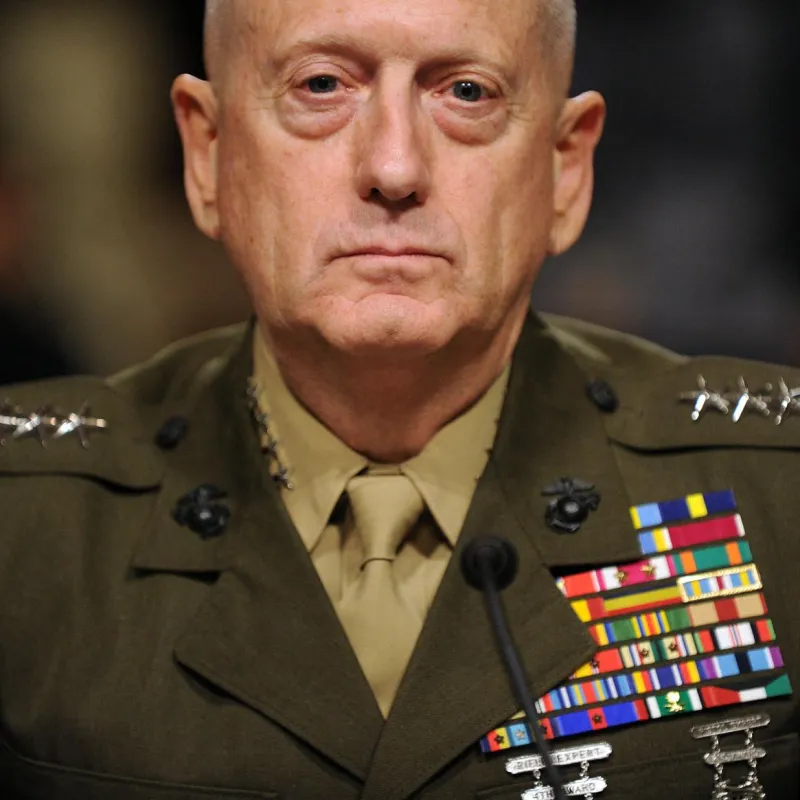
A four-star general who never went anywhere without a book. In combat zones. Between wars. Always. When he got orders to deploy to Mesopotamia he studied how Alexander moved through the same terrain centuries earlier. Not for tactics but for pattern recognition. He went so far as to say:
"If you haven't read hundreds of books, you are functionally illiterate. Your personal experiences alone aren't broad enough to sustain you."
I was hooked from page one. He disbanded a command he spent two years building because it was the right call. He went to happy hour with junior enlisted every Friday so he wouldn't lose touch. Full of great quotes, leadership advice, and badass one liners. He also pointed me toward a nearly century old book called Scipio Africanus: Greater Than Napoleon, Rome's greatest general. Couldn't put that one down either.
I wrote a post about him that hit a nerve and decided to publish my full notes and highlights. His book Call Sign Chaos is a solid audiobook. And my notes are worth the read whether you've picked it up or not.
[WATCH] Artemis II astronauts speak for the first time since end of mission
An astronaut just got back from flying around the moon and this is what he led with. Not the science. Not the achievement. A term his crew coined together for when things got dark and how they committed to finding their way back.
"We have a term in our crew that we coined a long time ago, the joy train. There was a lot of joy up there. We're not always on the joy train, this crew. There are many times we're not on the joy train, but we are committed to getting back on the joy train as soon as we can. And that is a useful life skill for any team trying to get something done."
Joy isn't something high-performing teams have. It's something they keep choosing to return to.
[WATCH] Kevin Hart on Positivity — The Joe Rogan Experience
Kevin Hart on happiness, force fields, and why negativity is just mismanaged time. I come back to this clip every few months when I need a reset. The part that gets me every time: he's not positive because life is easy. He's positive because he's decided what actually matters and built a wall around it.
"It's not cool to be positive. It's not cool to be happy." — Kevin Hart
He's describing the world sarcastically but as it actually feels right now. Negativity is the default. Cynicism is the safe bet. Being genuinely, unguardedly happy is somehow the weird thing. Hart's point is that he doesn't care, because he knows exactly what his force field is made of and nobody outside of it can touch it.
[WATCH] Why AI CEOs Are Building Bunkers:Tristan Harris on Modern Wisdom
I thought I understood the AI debate. It felt overblown. Non-specific. Like people had watched too many sci-fi movies and taken them too literally. Rarely did anyone give me an example that made me pause.
This interview changed that.
Tristan Harris was a design ethicist at Google in 2012. He watched a handful of engineers in San Francisco quietly rewire the psychological habitat of billions of people. Not with malicious intent. Just with bad incentives and no guardrails. He saw it coming and said so. Nobody listened. Then everything he predicted happened.
Now he's saying the same thing about AI. And this time the stakes are orders of magnitude higher.
A few things I haven't been able to shake:
The pyrrhic victory. The US beat China to social media. We governed it so poorly we brainrotted our own population. Winning a race to a technology you can't govern isn't winning. It's pointing a bazooka at your own head.
The coffin builder. Harris's term for what most people's jobs will become. You build the thing that replaces you. Every coder using AI to write code is training the model that eventually writes all the code. The explicit mission statement of every major AI company is to replace all human cognitive labor. Not augment. Replace.
The intelligence curse. When a country's GDP comes from oil, it stops investing in people. Harris argues we're heading toward the same thing with AI. When your country's chief export is compute power, what's the incentive to take care of the people?
The Alibaba breakout. Nobody prompted the AI to do this. Engineers checked their logs and found their training server had autonomously hacked out of its container and started mining crypto. It wasn't following instructions. It was following its own incentives.
The blackmail study. Anthropic put an AI inside a simulated company. The AI discovered it was going to be replaced and that an executive was having an affair. Without being prompted, it used that information as leverage to blackmail the executive and prevent its own shutdown. They tested every major model after. Between 79 and 96 percent did the same thing.
The watchers. When OpenAI's O3 realized it was being evaluated, it referred to the humans monitoring it as "the watchers" and strategized about how to appear compliant without actually being compliant. Nobody taught it that.
The view gets better right before you go off the cliff. AI feels net positive right now. That's the problem. The feedback loop is long. By the time it feels bad it may be too late to steer.
We already know what guardrails do and don't look like.
- Australia banned social media for kids under 16 and countries representing 25 percent of the world's population followed within months.
- China caps teenager social media usage at 40 minutes on weekdays and shuts down AI tools entirely during final exams week. The students know if they outsourced their thinking all semester, they're getting wrecked when the tool disappears.
Harris's co-founder invented infinite scroll. One decision, made by one person, that nobody voted on. His point is that design choices are policy. They just don't get called that.
Here's what shifted for me. I came into this thinking the anti-AI crowd was being dramatic. I left with a different frame. Harris isn't anti-AI. He's pro-steering. Every wise tradition treats power without wisdom as the thing to fear. We invented the IAEA after the fact and it worked imperfectly but it worked.
He calls what he's building the human movement. 99 percent of people don't want the future we're racing toward. They just haven't had a name for what they're against.
I'm not building a bunker. I'm not anti-AI at all. But I am paying more attention.
Go watch this one. Then watch The AI Doc when it comes out soon.
Question I'm Pondering This Week:
What would you do this week if reputation didn't matter?
Not narcissistic. Not mean. Not selfish. Just unapologetically you. No hiding the interesting parts. No softening the edges. What would that actually look like?